

 NEWS
NEWSWhy Most Bag Machines Can't Produce Pallet Covers — And What to Specify Instead
In high-volume warehousing and logistics operations, pallet protection is a recurring challenge. Stretch film—the conventional solution—requires workers to manually wrap each pallet, a labor-intensive process that slows throughput and creates inconsistent results. A purpose-built pallet cover bag eliminates the manual wrapping step: slip the bag over the palletized load and the job is done.
Not every bottom seal bag making machine is configured for this application — and the gap between a correct and incorrect specification can mean the difference between stable production and chronic defect rates. Film width requirements, material handling demands, and production format differ significantly from standard bag applications. For a broader overview of how sealing structure determines machine family selection across all bag types, see PAL's complete guide to plastic bag making machines.
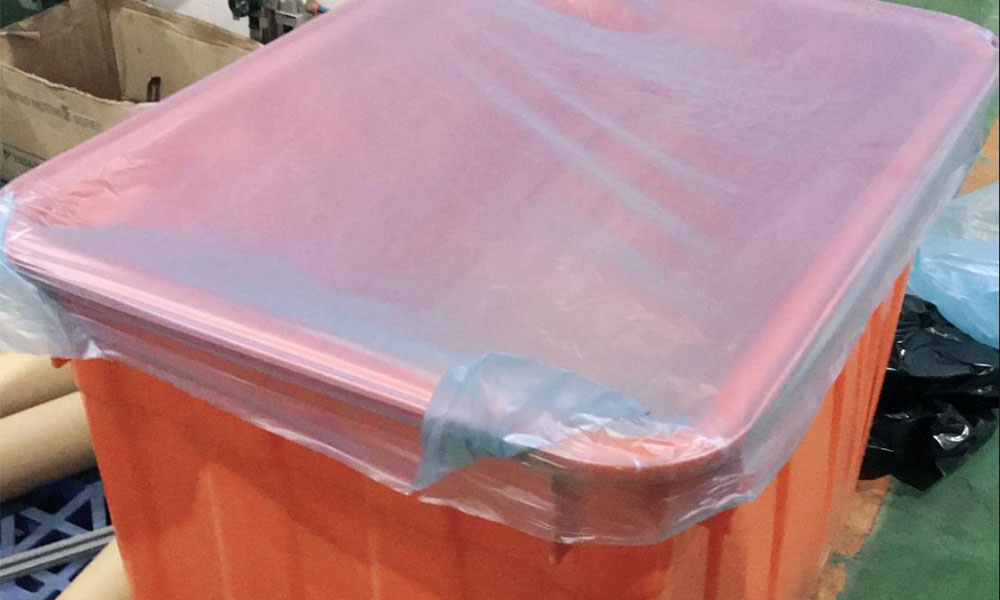
What Is a Pallet Cover Bag and Why It Is Replacing Stretch Film
A pallet cover bag is a large-format polyethylene bag—typically produced from LDPE multi-layer co-extruded film—designed to be pulled over a palletized load for protection against dust, moisture, and handling damage. Unlike stretch film, it requires no wrapping equipment or manual effort — simply slip it over the load.
Pallet Cover vs. Stretch Film: Operational Comparison
The productivity case for pallet cover bags is clear when measured at the operational level.
| Factor | Stretch Film | Pallet Cover Bag |
|---|---|---|
| Application method | Manual wrapping, multiple passes required | Single slip-on action |
| Labor requirement | 1–2 workers per pallet | Minimal — one operator covers multiple pallets |
| Load stability | Dependent on wrap tension and technique | Consistent — determined by bag specification |
| Physical demand | High — continuous physical effort | Low |
| Material type | Linear LDPE stretch film | LDPE multi-layer co-extruded film (Heavy Duty) |
| Dispensing format | Roll, requires dispenser | Bag-on-roll, perforated for tear-off |
Key Material Requirements for Pallet Cover Production
Standard polyethylene film—the material used in most bag-on-roll applications—performs poorly in pallet cover applications. The wide format and the handling stress during application require a film with higher tensile strength and elongation at break.
Multi-layer co-extruded LDPE film addresses this. The co-extrusion process combines multiple resin layers into a single structure, distributing load stress across layers and reducing tear risk during slip-on. The result is a film that stretches to conform to irregular load profiles without puncturing—a critical performance requirement when covering stacked goods with sharp corners or protruding edges.
Two Product Types, Two Machine Configurations
The bag type you intend to produce determines the direction of your machine selection — before evaluating any specification, confirm which product category your application falls into.
Pallet cover production and carton liner production use fundamentally different machine configurations. Pallet covers require a large-format roll-to-roll machine; carton liners require a piece-by-piece cutting format in a narrower width range. Combining both on the same production line requires a machine platform designed for that flexibility.
Pallet Cover (Large Format) — Roll-to-Roll Production
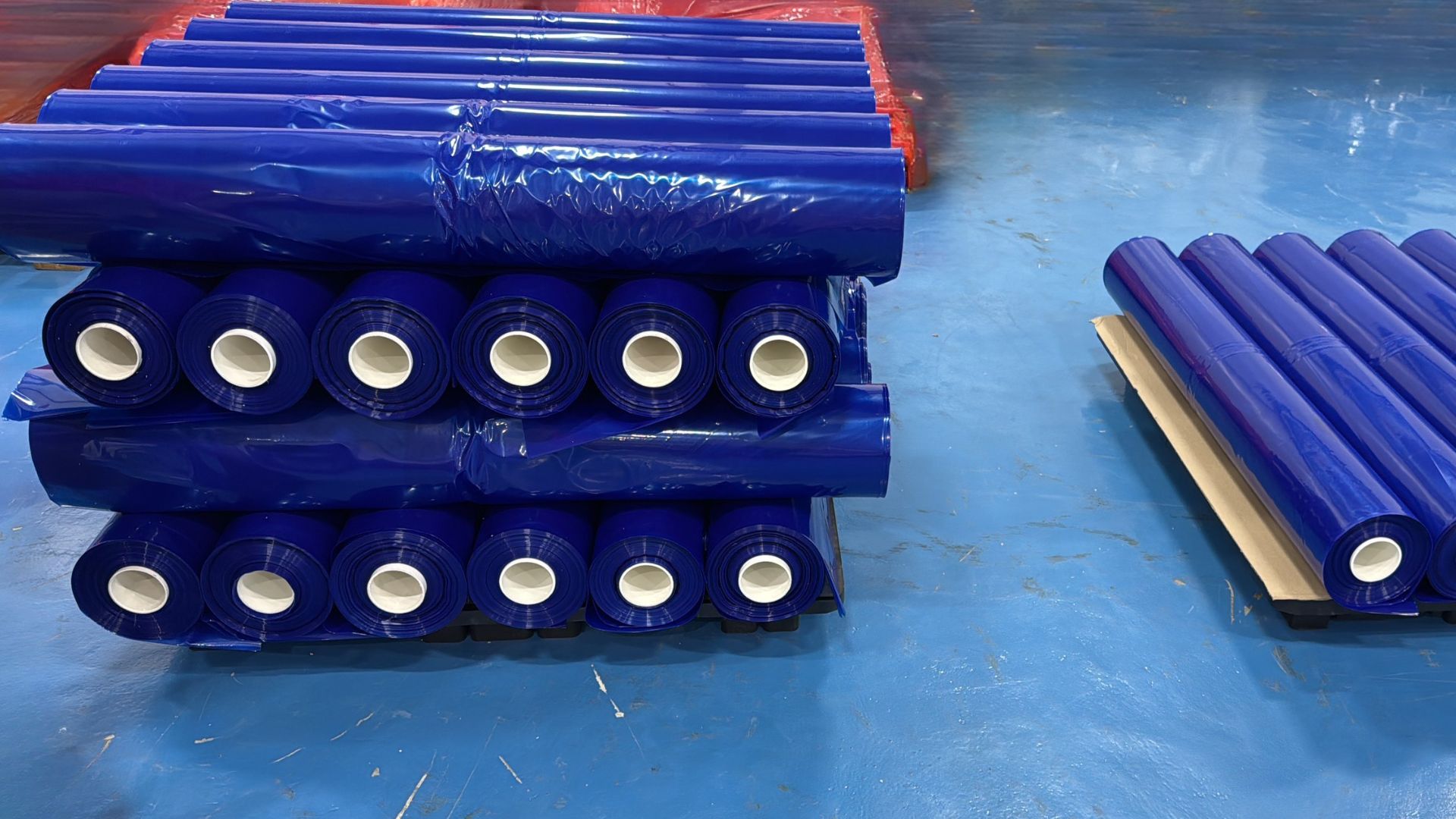
Pallet cover bags are produced in a roll-to-roll format. The finished bags remain on the roll, perforated between each unit for easy dispensing. This format allows packaging lines to pull bags from a roll dispenser without requiring individual bag counting or stacking.
The critical machine requirement for this application is film width. Standard pallet dimensions—800 mm × 1,200 mm (EUR pallet) and 1,000 mm × 1,200 mm (ISO pallet)—require a finished bag open width of at least 1,500 mm to accommodate the full pallet perimeter with margin. A machine with a maximum working width of 1,200 mm cannot produce a bag that fits over a standard pallet. This is the single most common specification error buyers make when sourcing equipment for this application.
Minimum working width: 1,500 mm. Machines rated at 1,200 mm maximum are not suitable for standard pallet cover production.
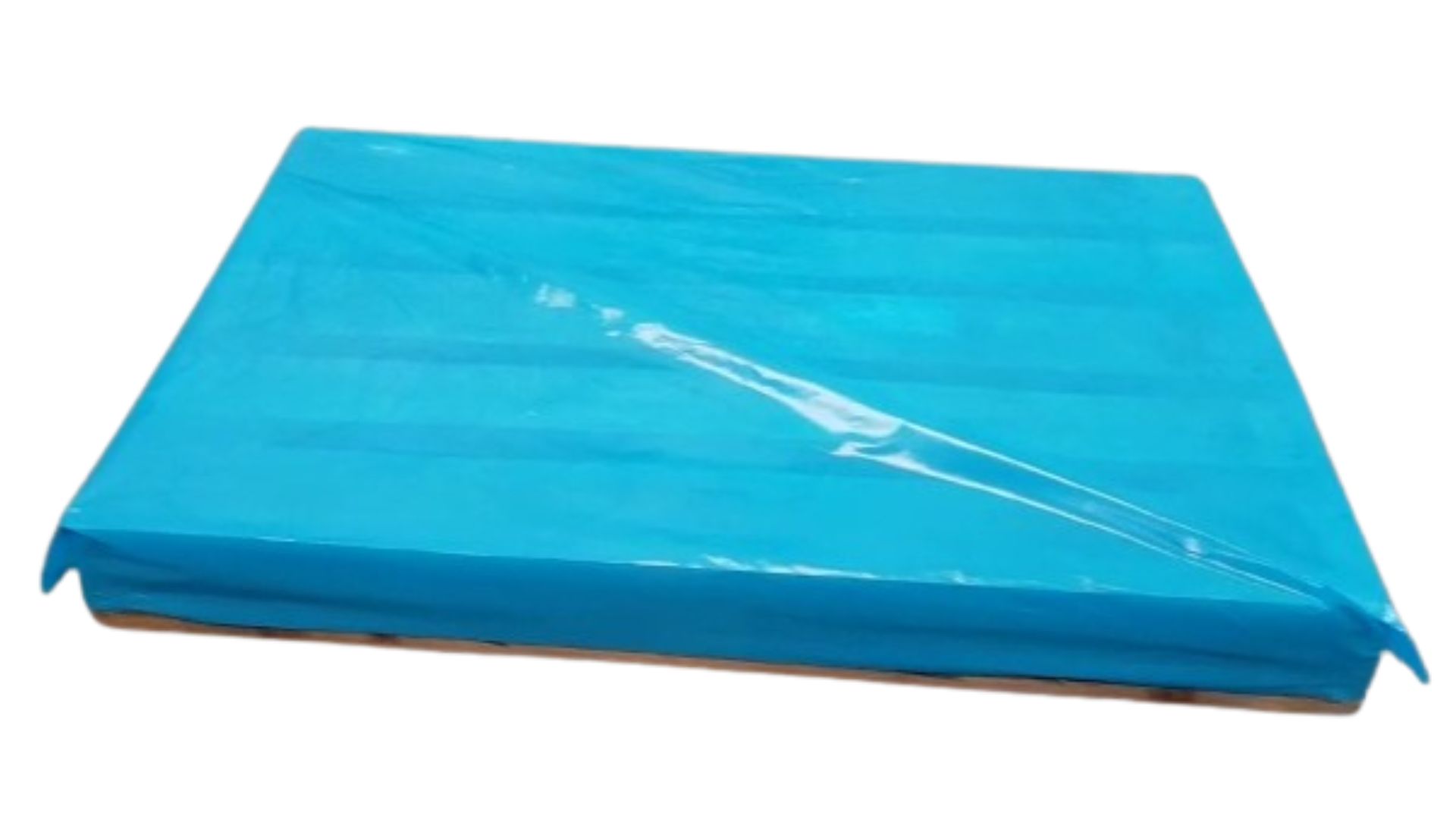
Carton Liner — Piece-by-Piece Production
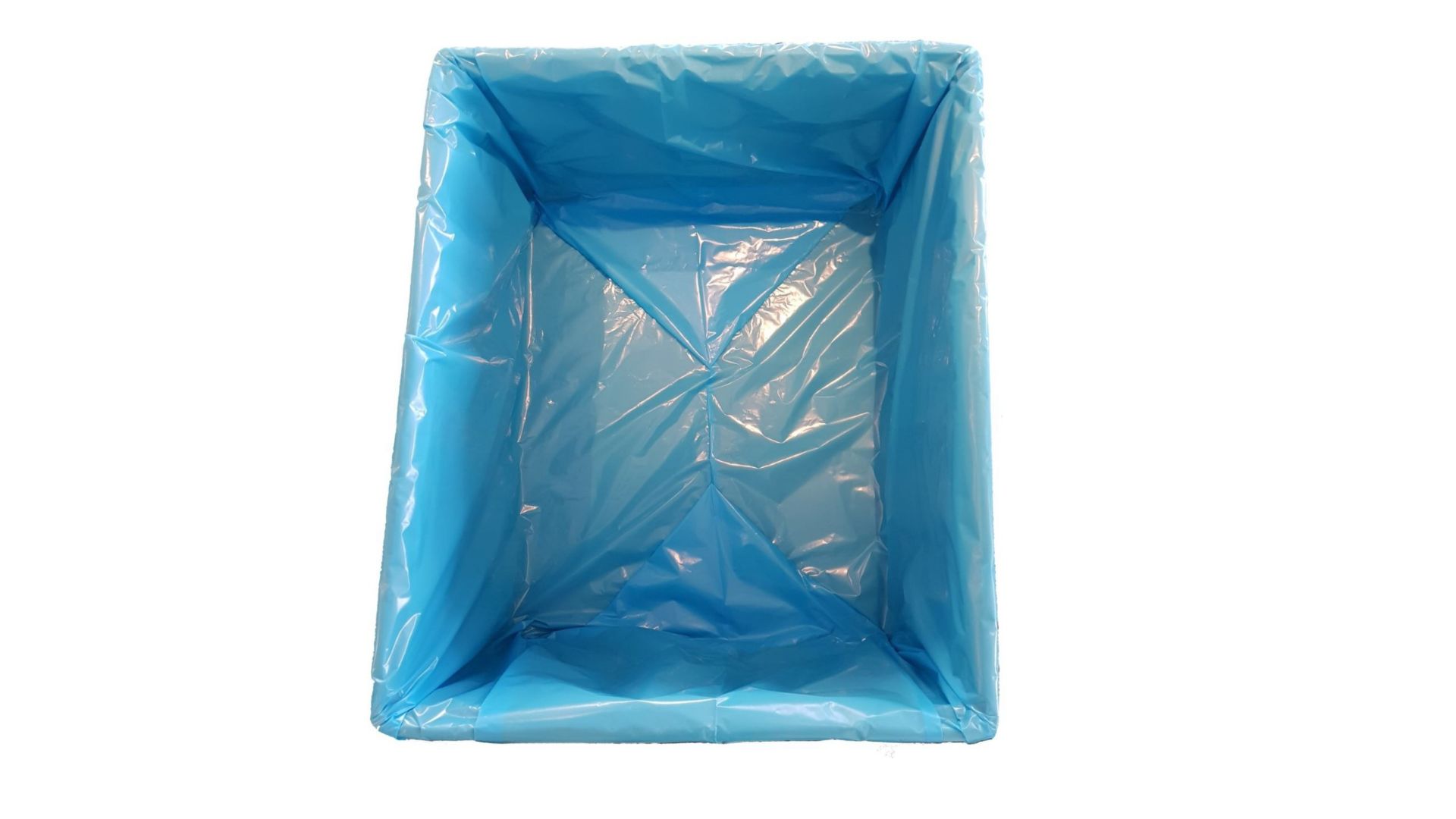
Carton liners are manufactured as individual sheets cut to precise lengths rather than in a roll format. These liners serve as a critical moisture and contamination barrier when inserted into corrugated cartons prior to filling. Since these bags are designed for interior container protection rather than full pallet enclosure, the required open-width is significantly narrower, typically ranging from 450 mm to 1,000 mm.
For these high-precision, narrow-to-medium width applications, PAL has engineered the 32/42BF-V series. Unlike the 65BFWFA-V designed for heavy-duty pallet covers, the 32/42BF-V platform is optimized for piece-by-piece cutting logic and high-speed stacking efficiency. It ensures perfectly square edges and consistent stacking even at maximum production speeds, making it the industry-standard choice for dedicated liner bag production.
| Parameter | Pallet Cover | Carton Liner | Note |
|---|---|---|---|
| Production format | Roll-to-Roll | Piece-by-Piece | Determines conveyor and stacking system |
| Bag width (open size) | ≥ 1,500 mm | 450–1,000 mm | Width drives machine model selection |
| Film material | LDPE multi-layer co-extruded | HDPE or LDPE | Co-extrusion preferred for pallet cover |
| Load type | Heavy Duty | Light to Medium | Liner has no load-bearing requirement |
| Primary application | Warehouse / logistics pallet protection | Carton interior moisture barrier |
Beyond Pallet Covers: Other Protective Bag Formats the Same Machine Produces
Investing in a wide-format bag making machine does more than solve pallet cover production — the same platform can serve a broader order range across multiple protective bag formats, directly improving equipment ROI.
The same bottom seal bag making machine platform that produces pallet covers can be configured to manufacture pallet toppers, box liners, carton liners, and Gaylord box liners. Each format serves a distinct protective function — and each has different width, format, and sealing requirements that determine the correct machine configuration.
Pallet Toppers — Top-Sheet Protection Without Full Enclosure
Pallet toppers are flat protective sheets placed over the top surface of a palletized load, rather than pulled over the full stack. Unlike a full pallet cover bag, a topper provides dust and moisture protection at the top face only — no bottom seal is formed. The sheet is dispensed from a roll and torn off at the point of use.
From a machine configuration standpoint, pallet topper production requires a cut-only system with no heat seal bar activation. Because no sealing cycle occurs, production speeds are higher than for full cover bags at equivalent widths. Film gauge for pallet toppers is typically thinner — 40–80 microns is standard — since the topper is not subject to slip-on handling stress.
Industry Terminology In global logistics and packaging markets, this protective format is also widely recognized as:
- Pallet Top Sheets: Common in standard distribution and high-volume logistics.
- Poly Top Covers: Frequently used in industrial and construction material protection.
- Top Sheeting: A term often used for high-speed, roll-fed automated dispensing lines.
Box Liners, Carton Liners, and Gaylord Box Liners — Large-Format Inner Packaging
These three terms describe the same product category at different scales: a polyethylene bag inserted inside a rigid container before filling, providing a moisture and contamination barrier between the contents and the container walls.
| Format | Typical Container | Bag Open Width | Production Format |
|---|---|---|---|
| Box Liner / Carton Liner | Standard corrugated carton | 450–1,000 mm | Piece-by-Piece |
| Gaylord Box Liner | Large bulk gaylord box (octabin) | 1,000–1,500 mm | Piece-by-Piece or Roll |
| Pallet Cover Bag | Full palletized load | ≥ 1,500 mm | Roll-to-Roll |
Gaylord box liners are the bridge format between standard carton liners and full pallet cover bags. A Gaylord box typically measures 1,000–1,200 mm in internal width, placing liner production at the upper edge of narrow-format machine capacity and the lower edge of wide-format capacity. For converters running both formats, this overlap is precisely the case for a combo machine configuration: the wide-format line handles full pallet covers; the narrow-format line covers carton liners; Gaylord liners run on whichever line matches the customer's specific Gaylord dimensions.
Film material for liner applications: LDPE is preferred where flexibility is critical; HDPE suits applications requiring higher stiffness or puncture resistance at lighter gauge.
Critical Machine Specifications for Pallet Cover Production
The three parameters below are the ones most commonly underestimated at the purchasing stage — and the most likely to cause a specification mismatch that surfaces only after installation. Each should be confirmed before requesting a machine quotation. Three technical parameters determine whether a bottom seal bag making machine is suitable for pallet cover production: film width capability, sealing system performance on thick gauge film, and the drive system architecture. Evaluating machines on these criteria—rather than speed alone—prevents costly specification mismatches.
If you are still in the early stage of machine selection and need a broader framework before getting into pallet cover specifics, PAL's step-by-step plastic bag machine selection guide covers automation levels, material compatibility, and total cost of ownership across all machine types.
Film Width Capability
The minimum functional requirement for pallet cover production is a working width of 1,500 mm. Machines configured for standard bottom seal bag production typically max out at 800–1,000 mm—well below the pallet cover threshold.
When evaluating machines, confirm the working width specification against the full open-size measurement of the target bag, not the finished bag width. A 1,500 mm open-size bag requires a machine with at least 1,500 mm working width across the sealing bar, cutting system, and film guide components.
Sealing System for Thick Gauge Films
Pallet cover film—typically 80–150 microns or heavier—requires more dwell time and consistent bar pressure than standard thin-gauge bag film. A sealing system calibrated for 30–50 micron refuse bags or standard bin liners will produce inconsistent seals on heavy-duty pallet cover film, resulting in higher defect rates and film waste.
Look for machines with independently adjustable sealing temperature and dwell time across the full bar width. On large-format machines, temperature uniformity across a 1,500+ mm sealing bar is a meaningful quality differentiator: uneven temperature distribution produces seal strength variation from edge to center, which is not acceptable for load-bearing pallet covers.
Drive System: Servo vs. Conventional
In pallet cover production, film handling demands are higher than in standard bag applications. Wide-format thick film generates significant inertia during acceleration and deceleration cycles. A conventional induction motor drive system compensates with mechanical tension adjustments, increasing setup time and operator dependency.
A full-servo drive system—where each film feed axis is independently controlled by a servo motor—addresses this directly. Film acceleration and deceleration profiles are software-defined, eliminating mechanical tension adjustment. Setup parameters are stored digitally, allowing one-button production resumption after material changeovers. In high-mix operations producing multiple cover sizes, this reduces job changeover time from 30–45 minutes to under 10 minutes.
PAL's Custom Engineering Approach: Single Line and Combo Configuration
There is no standard catalog configuration for pallet cover production — the correct machine setup depends on your target bag width range, film specification, and whether you need to run multiple bag formats from a single line. PAL (PLAS ALLIANCE LTD.) designs pallet cover and carton liner machines as custom engineering projects rather than catalog products. This approach allows integration of single-line and two-line configurations within the same machine frame—a capability that most standard bag machine manufacturers do not offer.
The 65BFWFA-V platform serves as the foundation for large-format pallet cover production. It operates in a single-line configuration with a working width suitable for standard pallet formats and above. The full-servo drive architecture means film tension, sealing parameters, and production speed are set digitally—operators access production through a single-button interface rather than manual mechanical calibration.
For operations requiring both pallet cover and carton liner production from a single machine investment, PAL engineers a two-line combo configuration. This integrates a wide-format single line for cover production and a dual-line narrow format for liner production on the same machine platform. Competitors in this segment typically manufacture dedicated single-purpose machines; the combo approach reduces capital expenditure and floor space requirements for converters producing both bag types.
The multi-layer co-extruded film compatibility built into PAL machines is not an afterthought—it is a specification driven by real pallet cover application requirements. Co-extruded LDPE film behaves differently from monolayer film during feeding, sealing, and winding. Machines designed without this consideration require extensive operator intervention to manage film behavior at large widths and heavy gauges.
Proven Performance: PAL's pallet cover systems have demonstrated consistent reliability in Malaysia, with multiple follow-on orders from established production facilities—a testament to their operational stability.
Frequently Asked Questions
-
What film material is recommended for pallet cover bag production?
LDPE multi-layer co-extruded film is the recommended material for pallet cover applications. Co-extrusion produces a film structure with higher elongation and puncture resistance compared to monolayer LDPE at the same gauge. Film gauge for pallet covers typically ranges from 80 to 150 microns depending on load weight and handling conditions.
-
What is the minimum machine working width required for standard pallet cover production?
A minimum working width of 1,500 mm is required to produce bags suitable for standard EUR and ISO pallets (1,000 mm × 1,200 mm base). Machines with a maximum width of 1,200 mm cannot produce a bag with sufficient open-size to cover a standard pallet. This is the most critical specification to verify before purchasing equipment for this application.
-
Can the same machine produce both pallet covers and carton liners?
Yes, with the right machine configuration. PAL offers combo configurations that integrate single-line wide-format production for pallet covers and dual-line narrow-format production for carton liners on a single machine platform. This is a custom engineering solution and requires a project-level consultation to configure correctly for the buyer's specific bag size range and production volume.
If you are in the process of planning a new production facility around pallet cover or liner bag output, PAL's guide to planning and setting up a plastic bag making machine plant covers equipment selection, facility layout, regulatory requirements, and ROI modeling.
Ready to specify your pallet cover machine?
PAL engineers custom pallet cover and carton liner machine configurations based on your bag size range, film specification, and production volume requirements. Submit your project parameters through the inquiry form and our engineering team will review your requirements directly. Contact PAL Engineering Team


Date:2024-09-11
Date:2020-05-20